
Choosing the right countertop material is one of the most important decisions when designing or renovating a kitchen. A kitchen countertop should not only enhance the beauty of the space but also withstand daily cooking, heat, spills, scratches, and heavy use. Among the most popular choices, quartz and granite stand out for their durability, elegance, and long-lasting performance.
While both materials are excellent options, they differ in terms of appearance, maintenance, durability, cost, and functionality. Understanding these differences can help homeowners choose the countertop that best suits their lifestyle and budget.
In this article, we compare quartz and granite across several key factors to determine which one is better for your kitchen.
What Is Quartz?
Quartz countertops are engineered stone surfaces made from approximately 90–95% natural quartz crystals mixed with resins, pigments, and binding materials. This manufacturing process creates a non-porous, highly durable surface available in a wide variety of colours and patterns.
Unlike natural stone, quartz offers a more consistent appearance because it is manufactured under controlled conditions.
What Is Granite?
Granite is a natural igneous rock formed deep beneath the Earth’s surface over millions of years. Large slabs of granite are cut, polished, and fabricated into kitchen countertops.
Each granite slab has unique colours, mineral patterns, and natural veining, making every countertop one of a kind.
Appearance and Design
Both quartz and granite are visually appealing, but they offer different aesthetics.
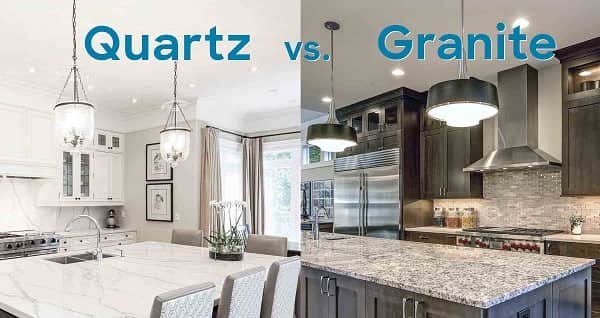
Quartz countertops provide a clean, modern, and uniform appearance. They are available in hundreds of colours, finishes, and patterns, including designs that mimic natural marble and stone. Because quartz is engineered, homeowners can achieve a consistent look throughout the kitchen.
Granite countertops showcase natural beauty with unique veins, speckles, and mineral variations. No two granite slabs are exactly alike, giving kitchens an elegant and luxurious appearance.
If you prefer a contemporary and consistent design, quartz is an excellent choice. If you appreciate the natural beauty and uniqueness of stone, granite is the better option.
Durability
Both materials are highly durable and suitable for busy kitchens.
Quartz is:
- Highly resistant to scratches
- Extremely hard and durable
- Resistant to stains
- Non-porous
- Less likely to chip under normal use
Granite is also:
- Extremely hard
- Scratch-resistant
- Suitable for heavy kitchen use
- Long-lasting with proper care
Although both materials are durable, quartz has a slight advantage because its engineered surface is more resistant to staining and moisture.
Heat Resistance
Heat resistance is an important consideration for kitchen countertops.
Granite performs exceptionally well under high temperatures because it is a natural stone. It can generally withstand hot cookware better than quartz.
Quartz contains resin binders that may become damaged if exposed to excessive heat for prolonged periods. Placing very hot pots or pans directly on quartz countertops is not recommended.
If heat resistance is your top priority, granite has the advantage.
Maintenance
Maintenance is one of the biggest differences between these materials.
Quartz requires very little maintenance because its non-porous surface does not absorb liquids or stains. It does not require sealing and can be cleaned easily with mild soap and water.
Granite is naturally porous and usually requires periodic sealing to prevent moisture absorption and staining. Proper sealing helps preserve its appearance and durability.
For homeowners seeking a low-maintenance countertop, quartz is the better choice.
Stain Resistance
Quartz countertops are highly resistant to stains because they are non-porous. Common kitchen spills such as coffee, tea, juice, oil, and sauces are less likely to leave permanent marks when cleaned promptly.
Granite is naturally more porous. Although sealing greatly improves stain resistance, spills should still be cleaned quickly to avoid potential staining.
In terms of stain protection, quartz generally performs better.
Hygiene
Kitchen hygiene is important for food preparation.
Quartz has a non-porous surface that resists bacteria, mould, and mildew growth because liquids cannot penetrate the material.
Granite can also be hygienic when properly sealed, but its porous nature means regular maintenance is necessary to maintain optimal cleanliness.
Quartz is generally considered the more hygienic option.
Cost Comparison
The price of both quartz and granite varies depending on quality, thickness, colour, brand, and installation.
Granite is available in a wide range of prices. Common granite varieties are often more affordable, while rare colours and exotic patterns can be significantly more expensive.
Quartz countertops are usually priced in the mid-to-premium range due to the manufacturing process and consistent quality.
Overall, the cost difference between premium quartz and premium granite is often relatively small.
Lifespan
Both materials can last for decades when properly installed and maintained.
Quartz countertops typically retain their appearance for many years with minimal maintenance.
Granite countertops can also last a lifetime if regularly sealed and properly cared for.
Both are excellent long-term investments for homeowners.
Which Countertop Should You Choose?
Choose Quartz if you want:
- Low maintenance
- Non-porous surface
- Superior stain resistance
- Modern and uniform appearance
- Wide colour selection
- Hygienic food preparation surface
- Easy cleaning
Choose Granite if you want:
- Natural stone beauty
- Unique patterns and textures
- Excellent heat resistance
- Luxurious appearance
- High durability
- Long-lasting natural material
- Strong resale appeal
Final Verdict
Both quartz and granite are outstanding choices for kitchen countertops, and each offers unique advantages. Quartz has become increasingly popular because of its low maintenance, stain resistance, non-porous surface, and consistent appearance. It is an excellent option for busy families who want a durable countertop that requires minimal upkeep.
Granite, however, continues to be a favorite among homeowners who appreciate the elegance and individuality of natural stone. Its excellent heat resistance, timeless beauty, and unique patterns make it a premium choice for traditional as well as modern kitchens.
Ultimately, the better material depends on your lifestyle and priorities. If you value convenience, easy maintenance, and superior stain resistance, quartz is the better option. On the other hand, if you prefer natural aesthetics, exceptional heat resistance, and the distinctive charm of real stone, granite is an excellent investment that can enhance both the beauty and value of your home for many years.
 Prateema Jain