
You’ve just cleared your Class 10 boards. Congratulations! But now comes the real question — what next?
This is one of the most important crossroads of your life, and it’s completely okay if you feel unsure. The good news? India has never had more career options for students than it does today. Whether you love science, business, arts, or working with your hands, there’s a path built for you.
Here’s a clear, honest guide to help you decide.
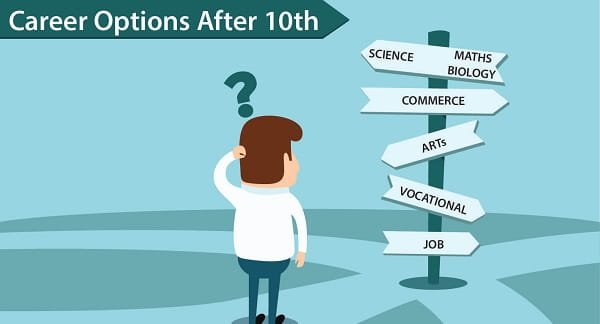
The Three Big Streams: Science, Commerce, and Arts
Science — The Classic Powerhouse
Science is the most popular choice, and for good reason. It opens the widest range of doors.
PCM (Physics, Chemistry, Maths) is for students who enjoy numbers and problem-solving. It leads to careers in engineering, architecture, computer science, and data science. JEE is the big entrance exam here, and getting into an IIT or NIT can set you up for life.
PCB (Physics, Chemistry, Biology) is for those interested in the human body, nature, and healthcare. It leads to medicine (MBBS via NEET), dentistry, pharmacy, nursing, and allied health sciences. If you dream of being a doctor, this is your route.
PCMB (all four subjects) keeps your options open but is heavier to manage. It’s good if you’re genuinely undecided between medicine and engineering.
Who should choose Science? Students who enjoy solving problems, have a natural curiosity about how things work, and are prepared to put in consistent hard work.
Commerce — Smart Choice for Business Minds
Commerce has exploded in popularity over the last decade, and for good reasons. India’s economy is growing fast, and businesses need smart financial and management minds.
With Commerce, you can pursue:
- CA (Chartered Accountancy) — one of the most respected and well-paying careers in India
- BBA / MBA — business management and entrepreneurship
- B.Com / M.Com — accounting and finance
- CS (Company Secretary) — a highly specialised legal and compliance role
- Banking and Finance — through exams like IBPS and SBI PO
Commerce also pairs well with economics, and many students go on to crack the UPSC Civil Services after a commerce or economics background.
Who should choose Commerce? Students who enjoy mathematics (not necessarily advanced), have an interest in money, business, markets, or law, and like analytical thinking.
Arts / Humanities — The Most Underrated Stream
Here’s the honest truth: Arts students in India are often discouraged by family and society. That’s a mistake.
Arts is the foundation of some of the most powerful and creative careers in the world.
With Arts/Humanities, you can become a:
- Journalist or Content Creator — media is booming in India
- Lawyer (LLB/LLM) — CLAT is the entrance exam for top NLUs
- Psychologist or Counsellor — mental health is a rapidly growing field
- Civil Servant (IAS/IPS) — many toppers come from a humanities background
- Designer — graphic, fashion, UI/UX
- Historian, Sociologist, or Researcher
- Teacher or Professor
Arts students are also leading the digital creator economy. If you have a voice, a perspective, and storytelling ability — that is a career.
Who should choose Arts? Students who love reading, writing, debating, understanding people, and want to work in creative or social fields.
Beyond the Three Streams: Vocational and Diploma Courses
Not everyone needs to sit in a classroom for two more years before figuring out a career. India has a strong vocational education system that leads to real, well-paying jobs faster.
ITI (Industrial Training Institute) courses in trades like electrician, plumber, welder, fitter, and mechanic take 1–2 years and lead directly to employment. Skilled tradespeople are in huge demand across India and abroad.
Polytechnic Diplomas (3 years) in engineering fields like civil, mechanical, electrical, and computer science let you enter the workforce early or later upgrade to a full B.Tech through lateral entry.
Hotel Management, Travel & Tourism, and Hospitality are growing rapidly with India’s booming tourism sector.
Beauty, Fashion, and Design courses from institutes like NIFT or private schools offer creative careers with real earning potential.
These paths are not “backup options.” They are smart, direct routes to financial independence.
The New-Age Career Options
The world has changed enormously. Here are careers that barely existed 10 years ago but are booming today:
- Data Science and AI — India is a global hub for tech talent
- Cybersecurity — one of the fastest-growing fields globally
- Digital Marketing and SEO — every business needs an online presence
- Game Design and Animation — India’s gaming industry is growing fast
- YouTube / Podcasting / Content Creation — yes, this is a real career now
- Drone Technology — an emerging field with huge agricultural and defence applications
Many of these can be started with short online courses from platforms like Coursera, NPTEL, or Udemy alongside your regular studies.
How to Actually Decide
Ask yourself three honest questions:
- What subjects do I genuinely enjoy? Not what I’m “supposed to” like — what actually makes me curious?
- What kind of life do I want? Office job? Fieldwork? Travel? Helping people? Building things?
- What are my strengths? Problem-solving, creativity, communication, leadership?
Talk to people working in fields you find interesting. Watch career videos. Take aptitude tests if you’re stuck. Don’t let peer pressure or family assumptions make this decision for you.
Final Word
There is no single “best” stream. The best choice is the one that matches your strengths, your interests, and your goals.
India in 2025 is full of opportunity — in tech, healthcare, business, arts, and trades alike. The students who succeed aren’t always the ones who picked the “right” stream. They’re the ones who picked their stream with intention and committed to it fully.
So take a breath, do your research, talk to people you trust — and then make your move.
The road ahead is long. But it starts with one honest decision today.
Frequently Asked Questions (FAQs)
Q1. Which stream is best after 10th in India?
A: There is no universally “best” stream. Science gives the most options, Commerce is great for business-minded students, and Arts opens doors in law, civil services, media, and creative fields. The best stream is the one that matches your interests and strengths — not your neighbour’s child’s choice.
Q2. Can I change my stream after Class 11?
A: Yes, but it’s not easy. Most schools allow a stream change within the first few weeks of Class 11. After that, it becomes complicated. It’s better to spend time researching before you enrol than to change midway.
Q3. What if I score low marks in Class 10 — do I still have good options?
A: Absolutely. Marks matter for some competitive entrance exams, but they don’t define your entire future. Vocational courses, ITI, polytechnic diplomas, and many private college programmes have accessible entry requirements. Skills, attitude, and effort matter far more in the long run.
Q4. Is Commerce without Maths a good option?
A: Yes. Commerce without Maths (with Applied Mathematics or other subjects) is a valid choice and still allows you to pursue B.Com, BBA, journalism, hospitality, and several other degree programmes. However, CA and some finance-heavy courses may prefer or require Maths.
Q5. What is the scope of Arts stream students in India?
A: The scope is wider than most people think. Arts students can become IAS/IPS officers, lawyers, psychologists, journalists, designers, professors, social workers, politicians, and digital creators. The UPSC Civil Services — India’s most prestigious exam — is dominated by humanities graduates.
Q6. Can I do engineering without clearing JEE?
A: Yes. JEE (Main and Advanced) is for IITs and NITs, but hundreds of state-level engineering colleges accept state board entrance exams or Class 12 marks directly. Private universities like VIT, SRM, and Manipal also have their own entrance tests with broad eligibility.
Q7. What are the shortest courses after 10th that lead to a job quickly?
A: ITI trade courses (1–2 years) are among the fastest routes to employment. Short-term certificate courses in digital marketing, graphic design, coding, or beauty and wellness (6–12 months) are also available and lead to freelance or salaried work fairly quickly.
Q8. Is it okay to not know what career I want after 10th?
A: Very okay — and very normal. Most 15-year-olds don’t have a clear career plan, and that’s fine. Focus on picking a stream that you find interesting and are reasonably good at. Clarity comes with time, exposure, and experience. Don’t let uncertainty paralyse you.
 Prateema Jain