
Selecting the right material for furniture, cabinets, wardrobes, and home interiors is an important decision that affects durability, appearance, and overall cost. Among the many options available, particle wood and engineered wood are two of the most commonly used materials in modern furniture manufacturing. Although these terms are often used interchangeably, they are not the same.
Particle wood is actually one type of engineered wood. The broader category of engineered wood includes materials such as plywood, MDF (Medium Density Fibreboard), HDF (High Density Fibreboard), OSB (Oriented Strand Board), and particle board. Each has different properties and applications.
If your comparison is specifically between particle wood (particle board) and other engineered wood products like plywood or MDF, this guide will help you understand which option is better for your needs.
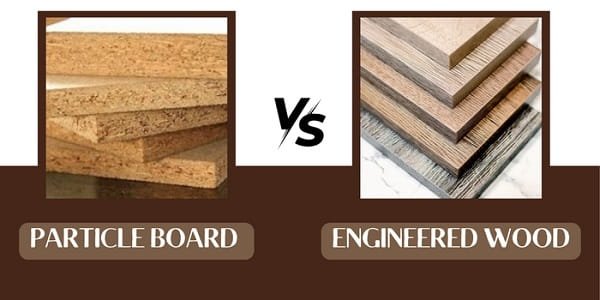
What Is Particle Wood?
Particle wood, also known as particle board or chipboard, is manufactured by compressing wood chips, sawdust, and wood particles together with resin and adhesive under high pressure and heat.
The finished board has a smooth surface that is often covered with laminate, veneer, or melamine to improve its appearance and durability.
Particle wood is widely used for:
- Budget furniture
- Office desks
- Shelves
- Modular furniture
- Wardrobes
- TV units
Its affordability makes it one of the most popular furniture materials.
What Is Engineered Wood?
Engineered wood refers to a broad range of wood-based products manufactured by combining natural wood fibres, veneers, strands, or particles with adhesives.
Common types of engineered wood include:
- Plywood
- MDF
- HDF
- Blockboard
- Particle board
- OSB
Compared to particle wood alone, premium engineered wood products generally offer greater strength, durability, and moisture resistance.
Strength and Durability
Strength is one of the biggest differences between particle wood and higher-quality engineered wood.
Particle wood has relatively lower strength because it is made from small wood particles. It performs well for lightweight furniture but may sag under heavy loads or repeated use.
Engineered wood products such as plywood are much stronger because they are made from multiple layers of wood veneer bonded together. MDF and HDF also offer better structural stability than particle board for many interior applications.
If durability is your priority, engineered wood is generally the better choice.
Moisture Resistance
Moisture can significantly affect furniture materials.
Particle wood absorbs water quickly if its protective laminate is damaged. Excess moisture may cause swelling, warping, or loss of strength.
Many engineered wood products, especially marine plywood and moisture-resistant MDF, are specifically designed to handle humid environments better than particle board.
For kitchens, bathrooms, or areas with high humidity, engineered wood offers superior performance.
Appearance
Both particle wood and engineered wood can look attractive when finished with laminates, veneers, acrylic, or PU coatings.
Particle wood provides a smooth surface suitable for decorative finishes, making it difficult to distinguish from more expensive materials at first glance.
Engineered wood, especially plywood with premium veneers or MDF with painted finishes, usually offers a more refined appearance and better edge finishing.
If premium aesthetics are important, engineered wood generally delivers better results.
Weight
Particle wood is generally lighter than many engineered wood products, making furniture easier to transport and assemble.
Plywood and HDF tend to be heavier due to their denser construction and layered composition.
The choice depends on whether portability or structural strength is more important for your project.
Cost Comparison
Budget is one of the main reasons people choose particle wood.
Particle wood is among the most affordable furniture materials available. It allows homeowners to furnish their homes economically without compromising too much on appearance.
Engineered wood products like plywood, marine plywood, and premium MDF usually cost more because they provide better performance, durability, and longevity.
If your primary concern is affordability, particle wood is the better option.
Screw Holding Capacity
Furniture often needs to withstand repeated opening, closing, and movement.
Particle wood has relatively poor screw-holding capacity. Over time, screws may loosen if furniture is frequently assembled, disassembled, or subjected to heavy use.
Plywood and other premium engineered wood products hold screws much more securely, making them ideal for long-lasting furniture.
For wardrobes, kitchen cabinets, and modular furniture, engineered wood provides better reliability.
Maintenance
Particle wood furniture should be protected from water exposure and rough handling. Cleaning should be done with a soft, damp cloth without excessive moisture.
Engineered wood also requires routine cleaning, but many products are more resistant to daily wear and moisture, making maintenance easier over the long term.
Best Applications
Particle wood is suitable for:
- Budget wardrobes
- Office furniture
- Study tables
- Display shelves
- Ready-to-assemble furniture
- Temporary furniture
Engineered wood is ideal for:
- Kitchen cabinets
- Modular wardrobes
- Premium furniture
- Doors
- Bookshelves
- Dining tables
- Bed frames
- Interior wall panels
Which Material Should You Choose?
Choose Particle Wood if you want:
- Affordable furniture
- Lightweight products
- Smooth laminated finishes
- Budget-friendly home interiors
- Ready-to-assemble furniture
Choose Engineered Wood if you want:
- Better strength
- Longer lifespan
- Higher moisture resistance
- Improved screw holding
- Premium furniture quality
- Greater durability for daily use
Final Verdict
Both particle wood and engineered wood have their own advantages and are suitable for different applications. Particle wood is an economical choice for homeowners looking to furnish their homes on a limited budget. It provides an attractive finish, is easy to manufacture, and works well for lightweight furniture that is not exposed to heavy loads or moisture.
Engineered wood, however, offers superior strength, durability, moisture resistance, and overall performance. Products such as plywood and high-quality MDF are better suited for kitchens, wardrobes, premium furniture, and areas where long-term reliability is essential.
Ultimately, the better choice depends on your needs. If cost is your biggest concern and the furniture will receive light to moderate use, particle wood is a practical option. However, if you are investing in furniture that should last for many years, withstand daily wear, and deliver better structural performance, engineered wood is the better investment despite its higher initial cost.
 Prateema Jain