
Education is one of those subjects that appears in almost every conversation about development, poverty, and long-term change in India. It comes up in policy discussions, in family conversations about what choices to make for children, in workplace conversations about where to direct charitable giving. The agreement that education matters is close to universal. The gap between that agreement and what actually happens in the lives of children who do not have reliable access to school, or who attend but do not learn, or who drop out before completing a basic cycle, is where the real work of change sits.
Non-governmental organizations working in child education occupy a specific and sometimes misunderstood position in this space. They are not the government, so they cannot make or enforce policy. They are not schools, so they are not the primary site of learning. What they can do, and what the better ones do well, is identify the gaps in what government systems provide, work with communities on the conditions that make it possible for children to attend and stay in school, and advocate for the policy changes that would make a structural difference rather than only a local one.
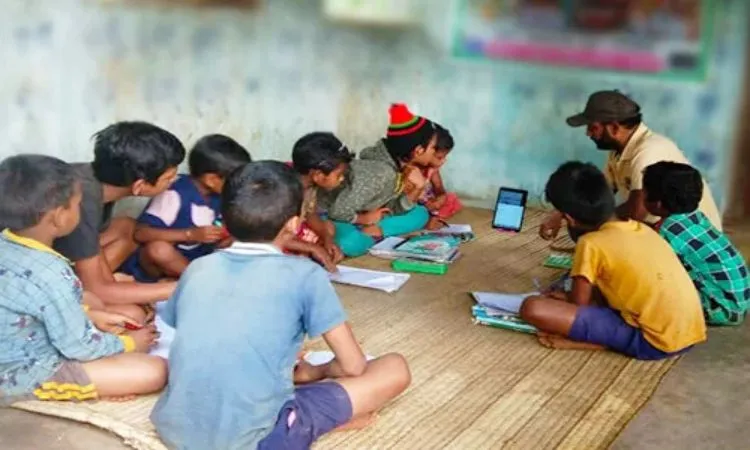
What Makes an NGO’s Work in Education Effective
The distinction between an NGO that produces visible activity and one that produces actual change in children’s lives is not always obvious from the outside, and it matters when deciding where to direct support. An organization that runs one-time awareness camps, distributes materials without a follow-up structure, or operates in isolation from the community systems that determine whether a child attends school is producing activity. An organization that works on the combination of factors, school access, family economic pressure, quality of teaching, community awareness about the value of education for girls and younger children, is working on the problem in a way that holds.
CRY India, Child Rights and You, has been working on child rights including education for over four decades, and the approach has consistently been one that combines direct program work with policy advocacy and community involvement rather than treating education as a supply-side problem alone. The underlying recognition is that a school building and a teacher are necessary but not sufficient conditions for a child’s education, and that the family and community context around the child determines whether those resources are actually used. You can learn more about the organization’s work and how it approaches education through this page on best ngo for child education, which covers the programs, the reach, and the model behind the work.
The Numbers That Frame the Problem
India has made substantial progress in school enrollment over the past two decades, and the numbers are worth acknowledging because they represent real effort at the policy and infrastructure level. The challenge now is less about getting children into school for the first day and more about what happens after that, whether children continue through a full cycle of education, whether they are learning at a level appropriate to their grade, and whether the pressures that cause dropout, particularly for girls and for children from economically marginal families, are being addressed.
Child labor remains connected to school dropout in ways that are not always visible in enrollment data, because a child can be enrolled and still spending the majority of their time in work that prevents actual learning. Gender is another consistent pressure point, with girls more likely to drop out of school for reasons that include early marriage, safety concerns about distance to school, and the prioritization of domestic work over education in households where resources are constrained.
Organizations that take these factors seriously in their program design, and that work with families and community leaders rather than only with school administrators, tend to produce outcomes that last beyond the period of program activity. CRY India’s model reflects this understanding, which is part of what has allowed the organization to sustain work in this area over a long period and in diverse geographic and social contexts across the country.
 Akash Sharma