
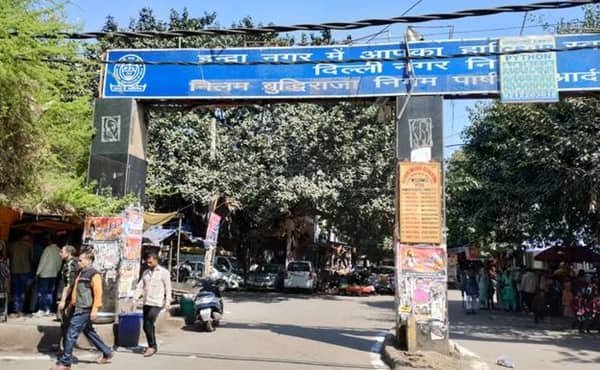
Indira Nagar is a well-established residential locality in North Delhi, tucked between Adarsh Nagar and Azadpur along the Grand Trunk Road (NH-44). Often referred to interchangeably as “Indra Nagar,” the colony falls within the Adarsh Nagar postal zone and is part of the Civil Lines administrative belt. Over the decades it has evolved from a modest middle-class settlement into a busy mixed-use neighbourhood, valued mainly for its rock-solid public transport links, walkable access to wholesale and retail markets, and affordable housing stock compared to South or Central Delhi. With the Yellow Line metro on its doorstep, the Ring Railway running alongside, and dozens of DTC bus routes plying through the area, Indira Nagar is one of those quietly functional Delhi pockets that punches above its weight on connectivity. Below is a quick overview followed by a detailed look at the locality.
Indira Nagar Quick Overview
| Parameter | Details |
| Locality Name | Indira Nagar (also spelt Indra Nagar) |
| Area / Zone | North Delhi, under Adarsh Nagar |
| District | North Delhi (Civil Lines administrative area) |
| Pin Code | 110033 |
| Post Office | Indira Nagar / N.S. Mandi (Civil Lines, Central) |
| Nearest Metro Station | Adarsh Nagar (Yellow Line) – approx. 0.4–0.7 km |
| Nearest Railway Station | Adarsh Nagar Railway Station (code: ANDI) |
| Major Road | NH-44 / Grand Trunk Road (GT Karnal Road) |
| Nearby Localities | Adarsh Nagar, Azadpur, Jahangirpuri, Model Town, Mukherjee Nagar, Majlis Park |
| Type of Area | Mixed residential and commercial |
| Municipal Body | Municipal Corporation of Delhi (MCD) |
Location
Indira Nagar lies in the northern stretch of Delhi, sandwiched between Adarsh Nagar to its north and Azadpur to its south, with Majlis Park and Model Town on either side. The colony sits just off the Grand Trunk (GT) Karnal Road, which is part of the larger NH-44 corridor connecting Delhi to Sonipat, Panipat, Karnal and onward to Jammu and Srinagar. Block A of Indira Nagar, the most commonly referenced sub-pocket, is registered under the address “Block A, Indira Nagar, Adarsh Nagar, Delhi – 110033,” and the colony shares its postal infrastructure with the N.S. Mandi (New Subzi Mandi) post office under the Civil Lines Central postal division. Geographically, the locality is part of the densely built-up northern fringe of the city, with the Outer Ring Road and Azadpur Mandi, one of Asia’s largest fruit and vegetable wholesale markets, forming its southern boundary. The terrain is flat, the streets are narrow and grid-like, and the housing comprises a mix of older two- to four-storey builder-floor structures, some independent kothis, and a handful of newer redeveloped properties.
Connectivity
Connectivity is, without question, Indira Nagar’s strongest selling point.
Metro: The Adarsh Nagar metro station on the Yellow Line is the area’s primary lifeline, located just a short walk (roughly 400–700 metres depending on the block) from most parts of Indira Nagar. The Yellow Line connects Samaypur Badli in the north all the way to Millennium City Centre (formerly HUDA City Centre) in Gurugram, passing through critical interchanges like Kashmere Gate (Red, Violet), New Delhi (Airport Express), Rajiv Chowk (Blue) and Central Secretariat (Violet). Jahangirpuri metro station is also reachable on foot from the northern edge of the colony.
Railway: The Adarsh Nagar Railway Station (station code ANDI) sits in Block A, Indira Nagar and operates under the Northern Railway zone on the Delhi Ring Railway line. The metro station is roughly a 500–550 metre walk from the railway station, providing easy interchange between the two systems. EMU services on this route make it useful for commuters heading to other Delhi suburbs.
Road and Bus: GT Karnal Road and the Outer Ring Road put the locality within easy reach of Kashmere Gate, ISBT, Civil Lines, Karol Bagh and the airport via the Inner Ring Road. A wide range of DTC bus routes serves the Adarsh Nagar stop, including routes 100, 100A, 103, 109, 116, 120, 123, 130, 135, 144, 148, 159, 169, 173, 181, 191 and many more, effectively connecting Indira Nagar to almost every corner of Delhi without the need for a transfer.
Airport: Indira Gandhi International Airport (Terminal 3) is roughly 22–25 km away via the Outer Ring Road or NH-48, typically 45–60 minutes by cab, and faster via the Yellow Line and Airport Express interchange at New Delhi station.
Nearby Places
Living in Indira Nagar means a host of important Delhi destinations are within a 2–6 km radius:
- Azadpur Mandi (less than 2 km south) — Asia’s largest fruit and vegetable wholesale market.
- Mukherjee Nagar and Kingsway Camp (around 3–4 km) — the well-known UPSC and competitive-exam coaching belt.
- Model Town (around 3 km) — a quieter, leafier residential neighbourhood with parks, banks and reputed schools.
- Civil Lines and Delhi University North Campus (around 5–6 km) — historic government quarters and academic hub.
- Kashmere Gate ISBT (around 7 km) — interstate bus terminal and major metro interchange.
- Pitampura and Netaji Subhash Place (NSP) (around 5–7 km) — large commercial and IT-park district with malls like Pacific NSP.
- Jahangirpuri and Samaypur Badli (2–4 km north) — adjacent residential areas connected on the same metro line.
For day-to-day needs, residents rely on local markets within Adarsh Nagar and Azadpur, plus large-format retail at Pacific Mall NSP. Healthcare options nearby include Max Super Speciality Hospital (Shalimar Bagh) and Babu Jagjivan Ram Memorial Hospital, and there are several schools and coaching centres in the surrounding neighbourhoods.
Lifestyle and Social Infrastructure
Indira Nagar offers the texture of a typical old North Delhi neighbourhood — narrow lanes lined with parked two-wheelers, ground-floor shops selling everything from groceries to mobile accessories, and a steady hum of activity from morning till late evening. The social fabric is largely middle-class, with a mix of long-time resident families, traders linked to the nearby mandis, and a growing tenant population of students and young professionals drawn by the affordable rents and metro access. Local markets within walking distance handle daily essentials, while bigger shopping runs are typically made to Kamla Nagar, Pitampura’s Netaji Subhash Place, or the Pacific Mall a short metro ride away. Street food culture is strong here too, with chaat, parathas, and chole bhature stalls dotting the GT Karnal Road stretch.
Real Estate and Affordability
Property in Indira Nagar largely consists of older builder floors, independent houses, and a smaller share of redeveloped 3–4 storey constructions. Compared to South Delhi or Dwarka, prices and rentals here are noticeably gentler, which is a big draw for first-time buyers and tenants who want metro connectivity without paying a premium. Rental demand is consistently steady because of the area’s appeal to UPSC aspirants studying in nearby Mukherjee Nagar, working professionals commuting along the Yellow Line, and small business owners operating out of Azadpur and Subzi Mandi. Investors generally view the locality as a stable rental-yield market rather than a high-appreciation one, given that the area is fully built up with limited room for new large-scale projects.
Pros and Cons
What works in its favour:
- Excellent metro, rail, and bus connectivity through Adarsh Nagar
- Affordable housing relative to the level of connectivity offered
- Proximity to wholesale markets, coaching hubs, and Delhi University
- Established social infrastructure with schools, clinics, and daily-needs markets nearby
What to be mindful of:
- Traffic congestion on GT Karnal Road and inner lanes during peak hours
- Limited parking space, typical of older Delhi colonies
- Air quality issues common to North Delhi, especially in winter
- Mostly older housing stock; modern gated-society options are scarce
Final Thoughts
Indira Nagar may not feature on glossy “best places to live in Delhi” lists, but it is exactly the kind of locality that quietly delivers value to its residents day after day. Its real strength lies in the combination of three things that are hard to find together in Delhi — metro proximity, mainline railway access, and affordability. For families with roots in North Delhi, students preparing for competitive exams, traders working out of the surrounding mandis, or anyone whose daily commute runs along the Yellow Line corridor, Indira Nagar (110033) is a genuinely practical address. It is not a luxury destination, and it does not pretend to be one; instead, it offers the connectivity and convenience of central Delhi at the cost of a peripheral one, which for many buyers and tenants is the smarter trade-off.
 Akash Sharma