
The range of materials available for interior wall surfaces in India has expanded considerably over the past decade, and with that expansion has come a decision-making challenge that most homeowners and designers are navigating without a great deal of guidance. Paint is still the dominant choice, and it makes sense as a starting point because it is the most familiar and the most flexible. But treating paint as the default for every surface in every room, while using other materials only as afterthoughts or accent choices, tends to produce interiors that look finished but not particularly designed.
The materials conversation for interior walls is really a conversation about what different surfaces do, both visually and practically, and how those qualities fit the specific demands of different rooms and different parts of a room. A kitchen wall above the counter has different requirements from a bedroom feature wall or a living room television backdrop. Material choices that acknowledge these differences produce better outcomes than those made on the basis of a single criterion like cost or appearance alone.
Materials That Cover the Most Common Interior Needs
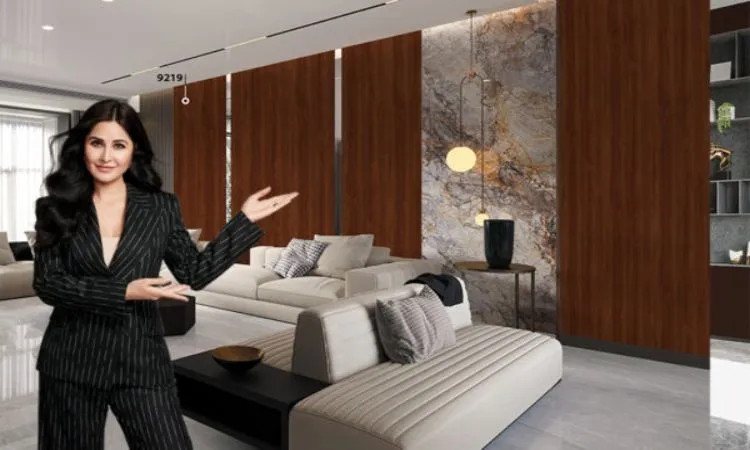
Laminate sheets are one of the most widely used surface materials in Indian home interiors, applied to everything from kitchen shutters and wardrobes to feature walls and study unit panels. The range of finishes available in laminate covers matte, gloss, textured, wood-grain, stone-effect, and abstract pattern surfaces, which means a single material category can serve a wide variety of aesthetic directions. The practical case for laminate in Indian homes is strong: it handles humidity and temperature variation better than many alternatives, it is scratch-resistant relative to paint, and it is available at price points that suit both budget and premium renovation projects.
The choice of laminate for wall surfaces rather than only furniture deserves specific attention. A laminate-finished feature wall, particularly in a bedroom or living room, produces a surface quality that paint cannot replicate, and the application process is far less disruptive than tiling or stone cladding. Advance Laminates covers a wide range of finishes in this space, and the full options across textures and colors are available through this page on sunmica sheet, which is a practical starting point for comparing finishes before a renovation decision is made.
Stone-effect and marble-look surfaces have moved well beyond bathroom applications and now appear on living room accent walls, kitchen backsplashes, and entrance foyers in contemporary Indian homes. The shift toward marble-look surfaces on walls reflects a broader design direction that values the visual weight and richness of stone without the cost and maintenance that actual stone requires. UV-coated surfaces in this category add durability and a depth of finish that makes the material read more convincingly in the final result.
Louvers and panel-based wall treatments are another category that has grown significantly in residential use, moving from commercial and hospitality interiors into home settings over the past few years. The visual quality of a louvers or fluted panel surface comes from the depth created by the ridged profile, which produces light-and-shadow variation that a flat surface cannot achieve. This texture makes a feature wall feel architectural rather than decorative, which is the distinction that separates an interior that reads as considered from one that simply has nice finishes. For wardrobes specifically, the resource on sliding wardrobe laminate design covers how laminate finishes apply specifically to wardrobe surfaces and what design directions work best in different bedroom styles.
How Surface Material Choices Affect the Whole Room
The way surfaces interact with light in a room is a consideration that often gets underweighted in material selection conversations. A high-gloss surface in a room with strong natural light creates reflections that can be visually busy, while the same surface in a north-facing room with limited light adds brightness without the glare problem. A matte or textured surface absorbs light rather than reflecting it, which produces a quieter, more grounded effect that works well in bedrooms and study areas but may feel flat in a room that is already dark.
Color temperature of materials sits alongside their finish quality as a consideration that affects how a room feels over the course of a day. Warm wood tones and off-whites feel different in morning light than they do in the evening, and the material choice can be made with that variation in mind. A surface that reads warm and inviting in artificial evening light may look different against strong afternoon sun, and checking a material sample in the actual room rather than only in a showroom gives a more accurate preview of the real-world result.
The combination of two or three materials in a single room, rather than one dominant choice throughout, tends to produce interiors with more visual interest and more depth. A painted wall alongside a laminate panel feature, or a tiled surface paired with a wood-grain laminate on adjacent cabinetry, creates contrast that makes each material read more clearly because it is seen against something different from itself.
 Akash Sharma